AR
AR "In the name of God, the Most Gracious, the Most Merciful. All praise is due to God, the Lord of all worlds. May peace and blessings be upon our master and prophet Muhammad, and upon his pure, noble family—the guiding and blessed ones.

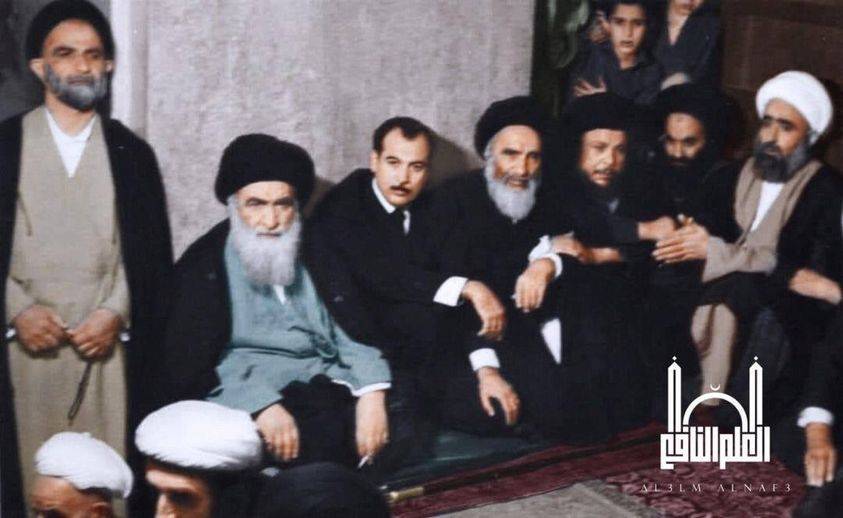
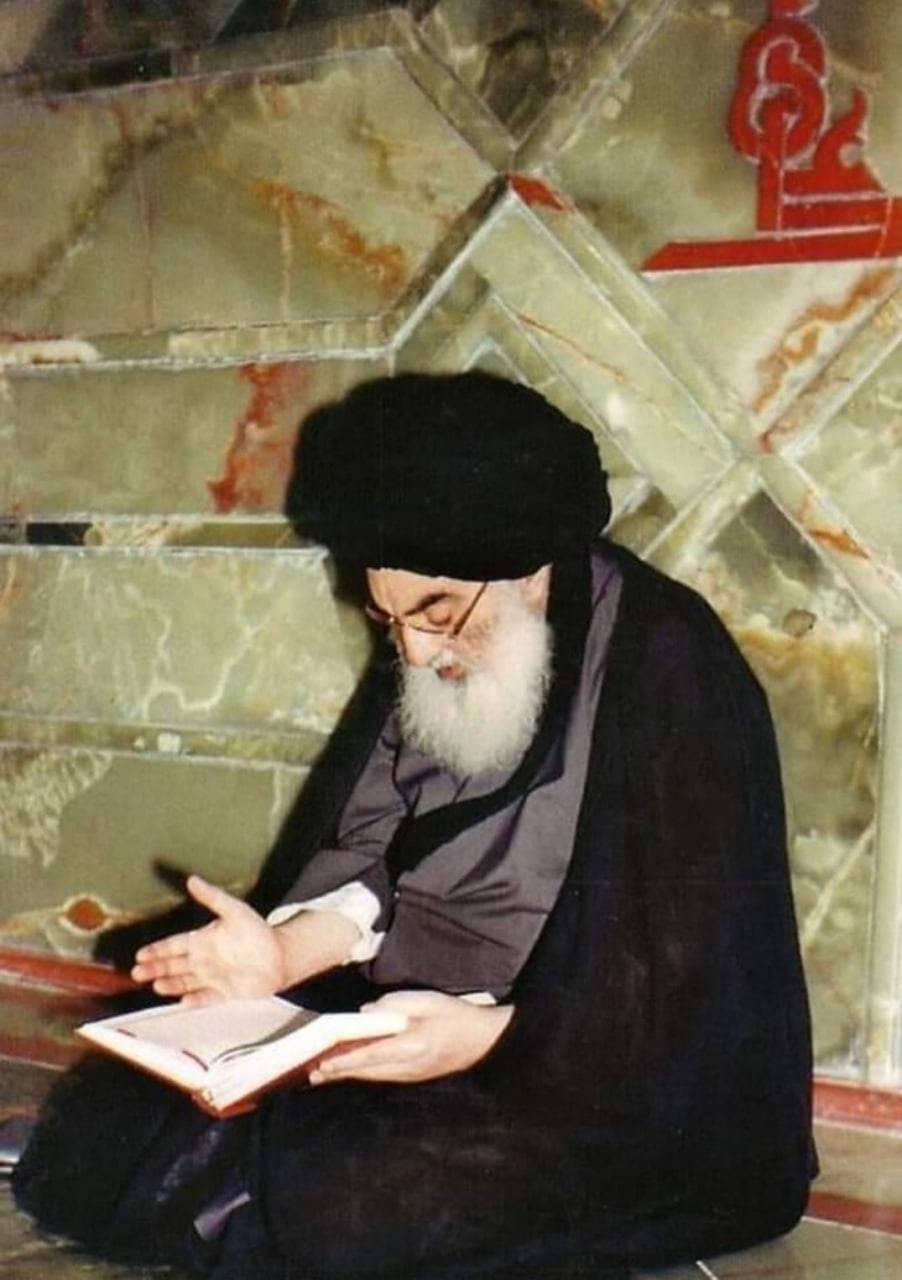
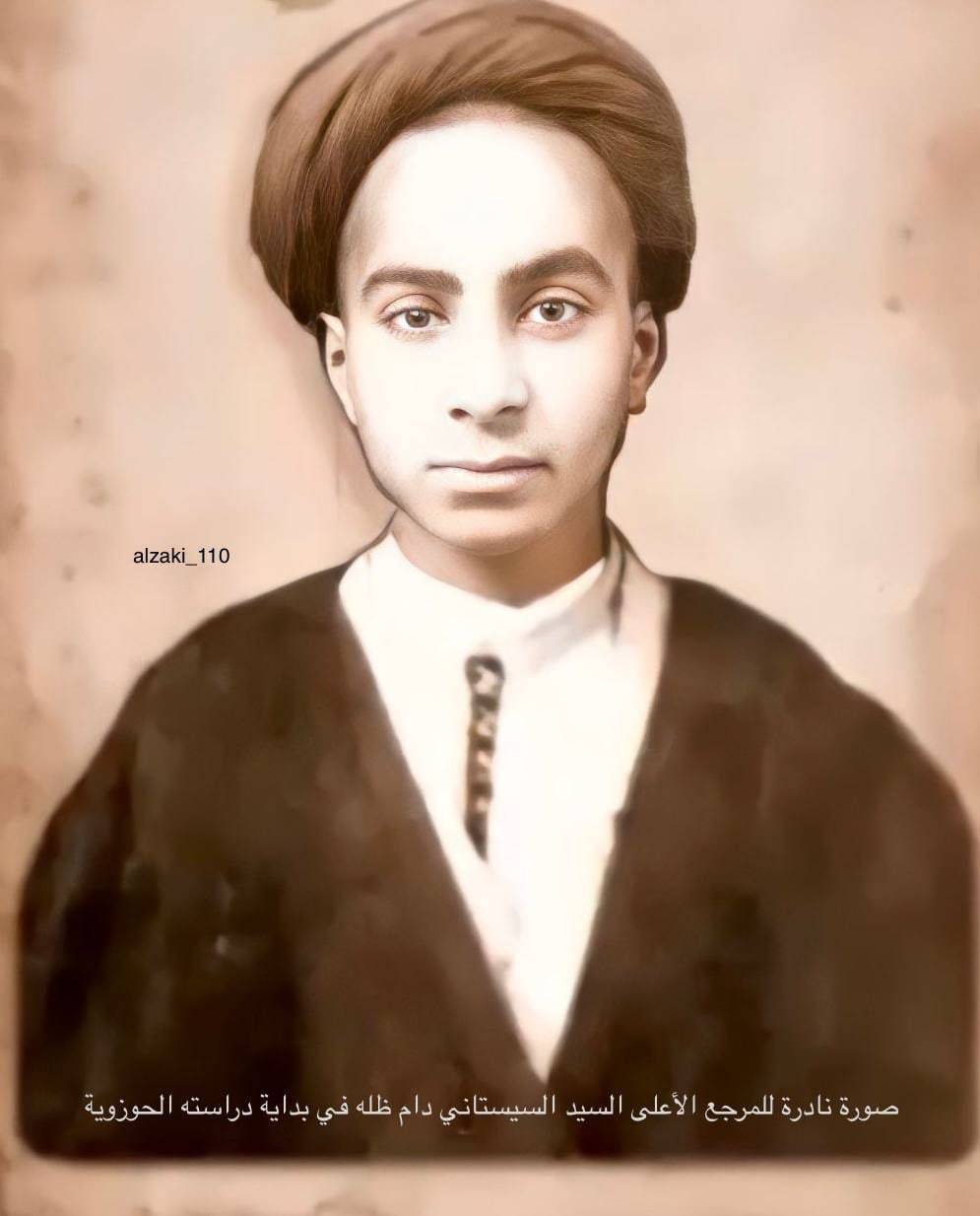
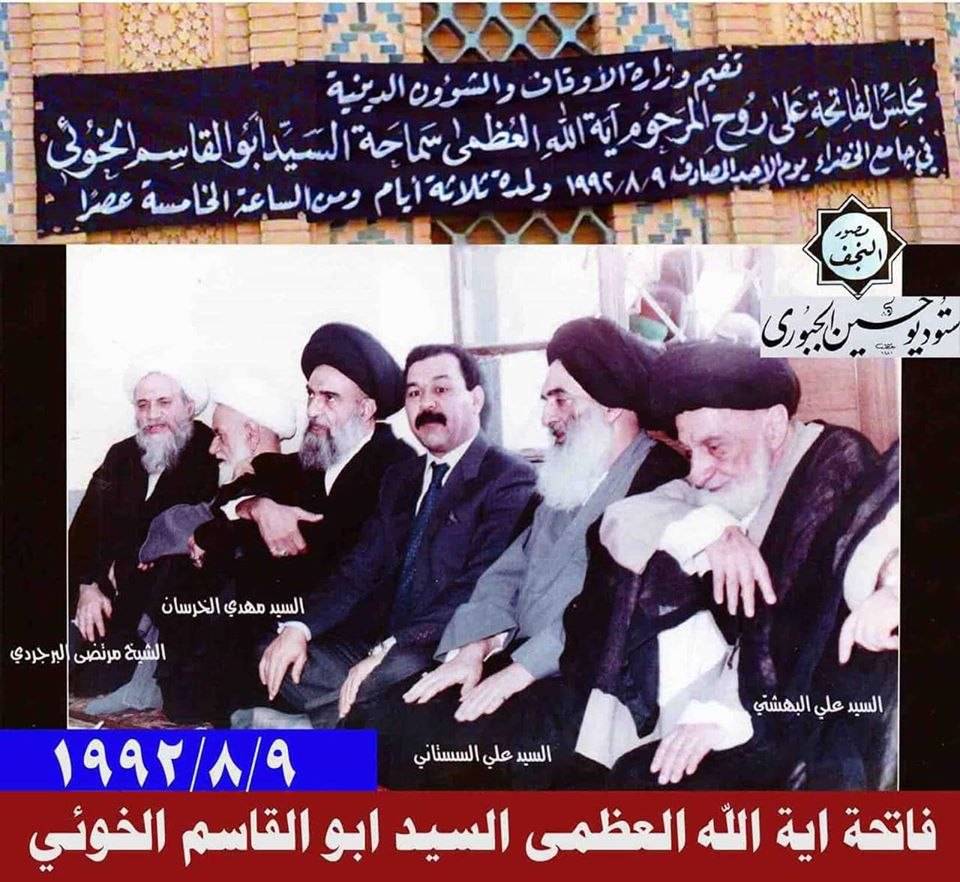
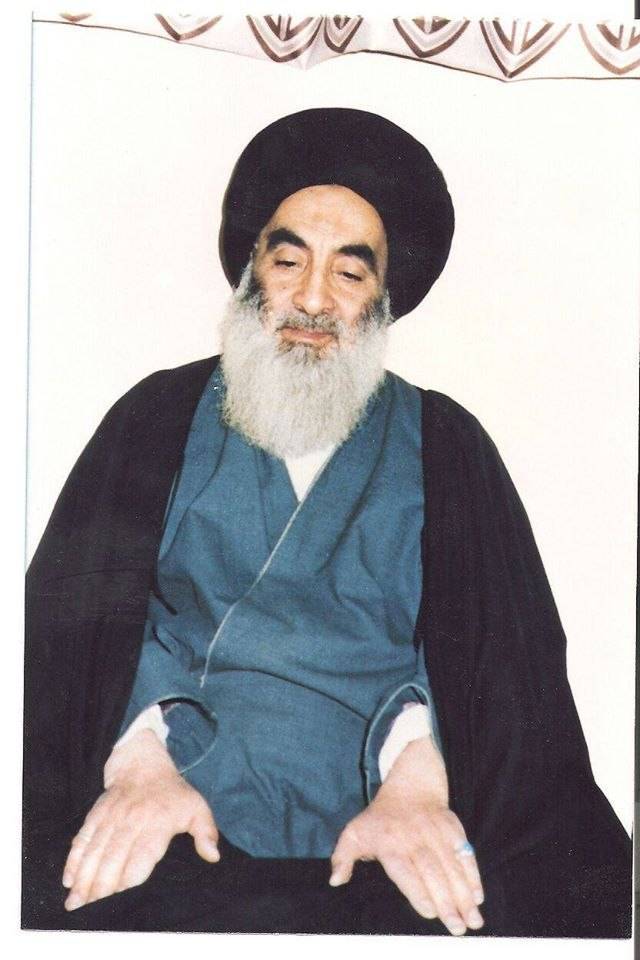

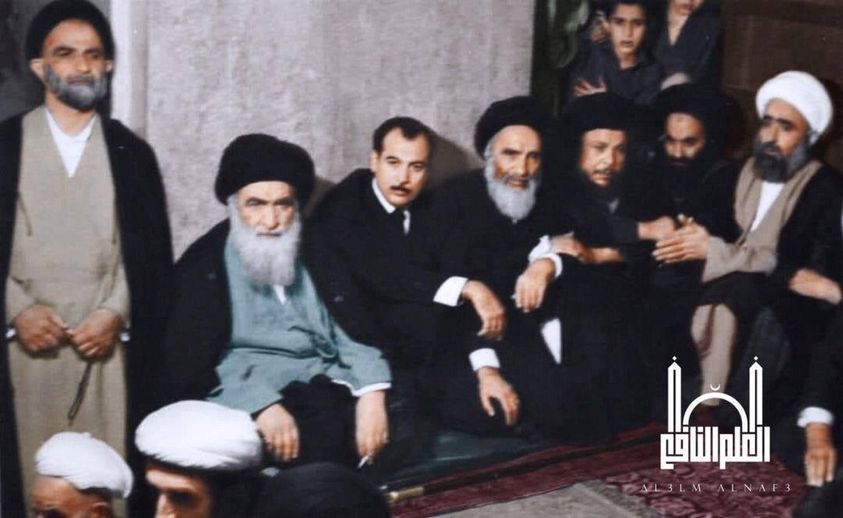
Thereafter The pulpit of Imam Sayyid al-Khoei (may his secret be sanctified) bore great and noble fruits over more than half a century—offering the purest and most excellent contributions in the realm of Islamic thought and in various sciences, issues, and significant Islamic stances. Hundreds of great scholars and virtuous figures graduated under his tutelage, taking it upon themselves to continue his intellectual path—a path rich in dedication, generosity, and sacrifice in service to Islam, knowledge, and society. Today, many of them are professors in the Islamic seminaries, especially in the holy city of Najaf. Among them are those who possess the scientific and social competence and merit needed to take on the responsibilities of education, training, and guiding the community in our time.
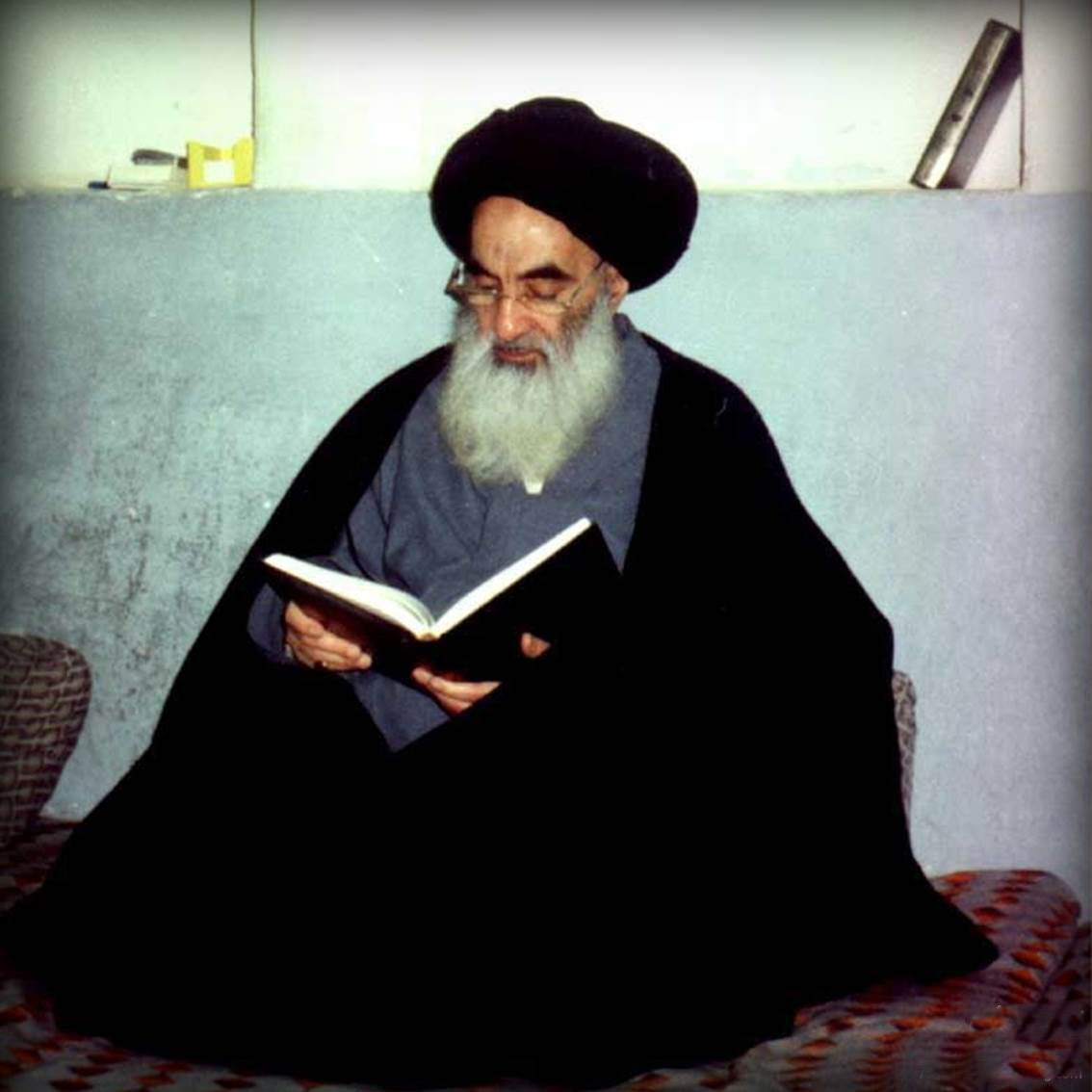
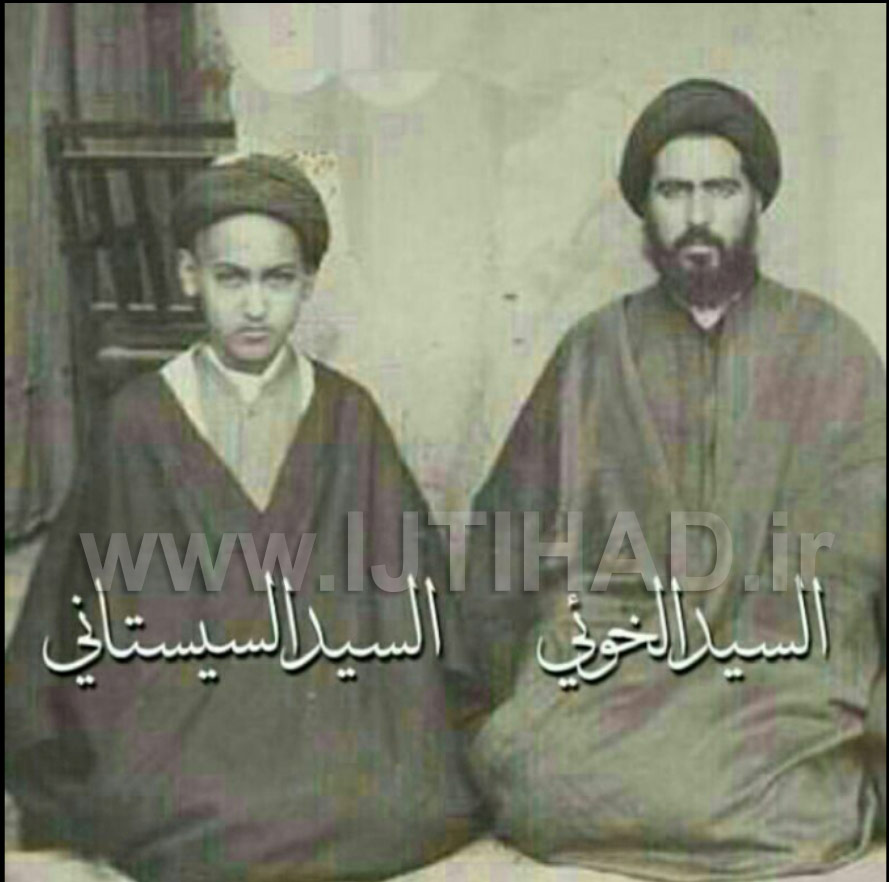
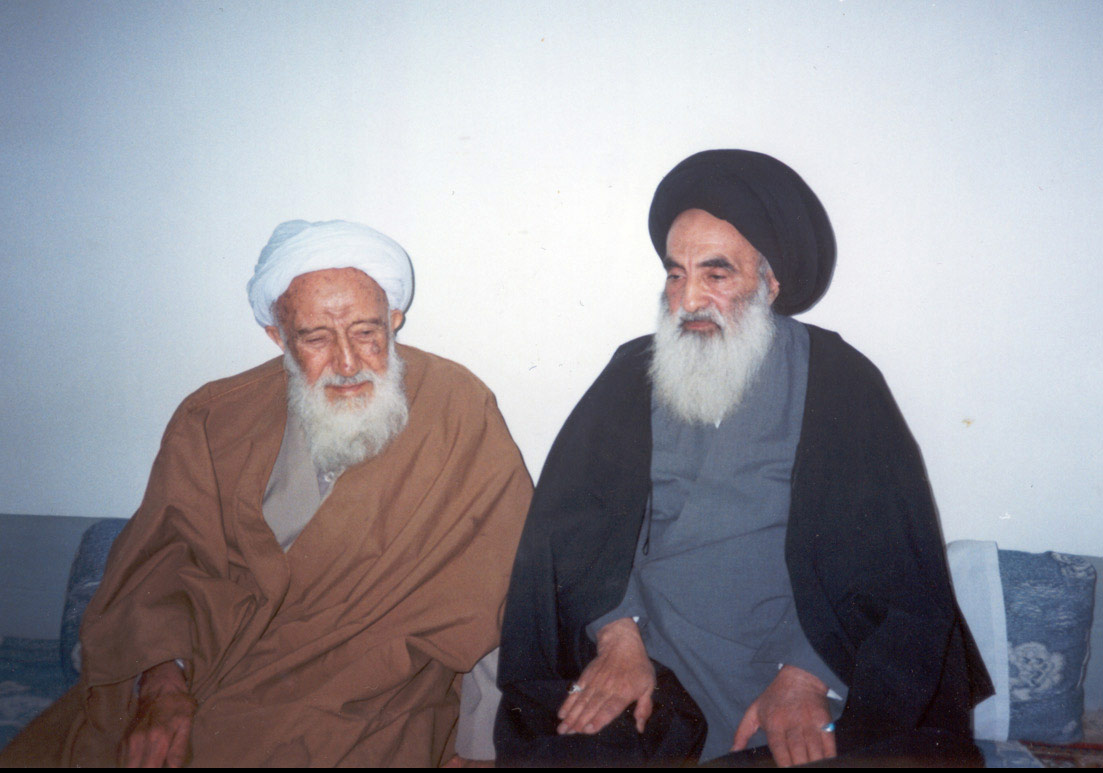
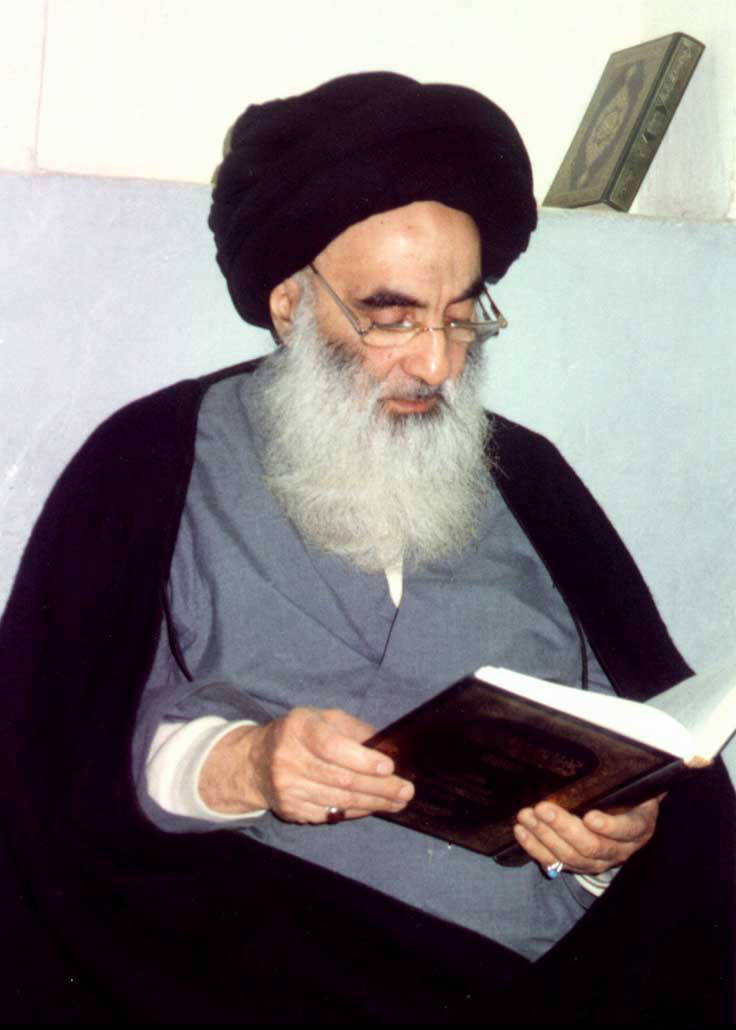
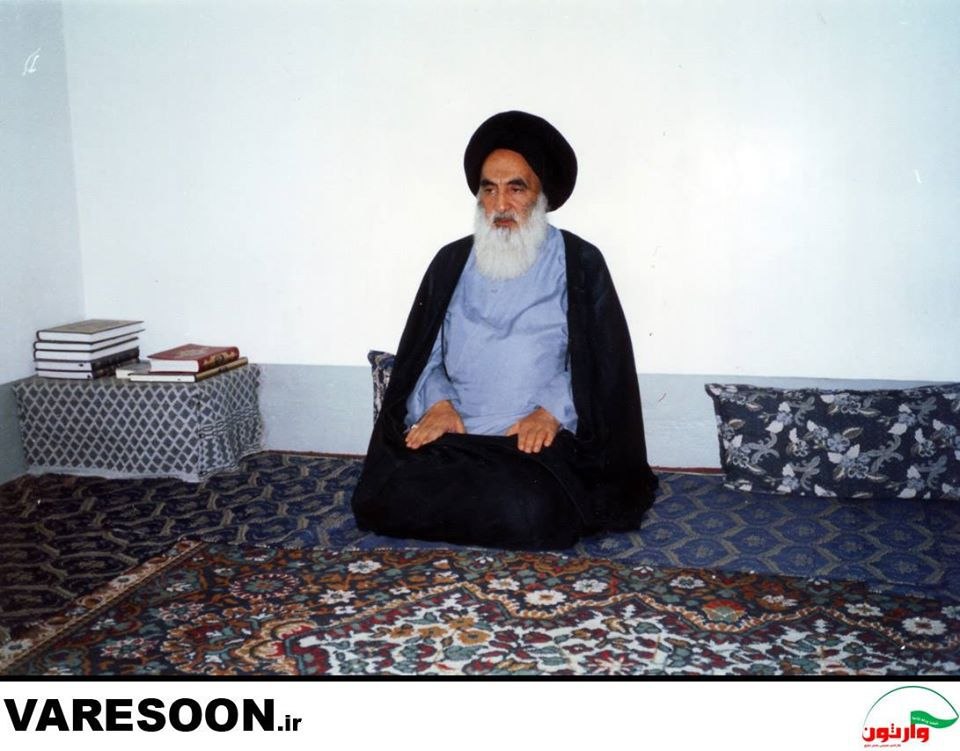
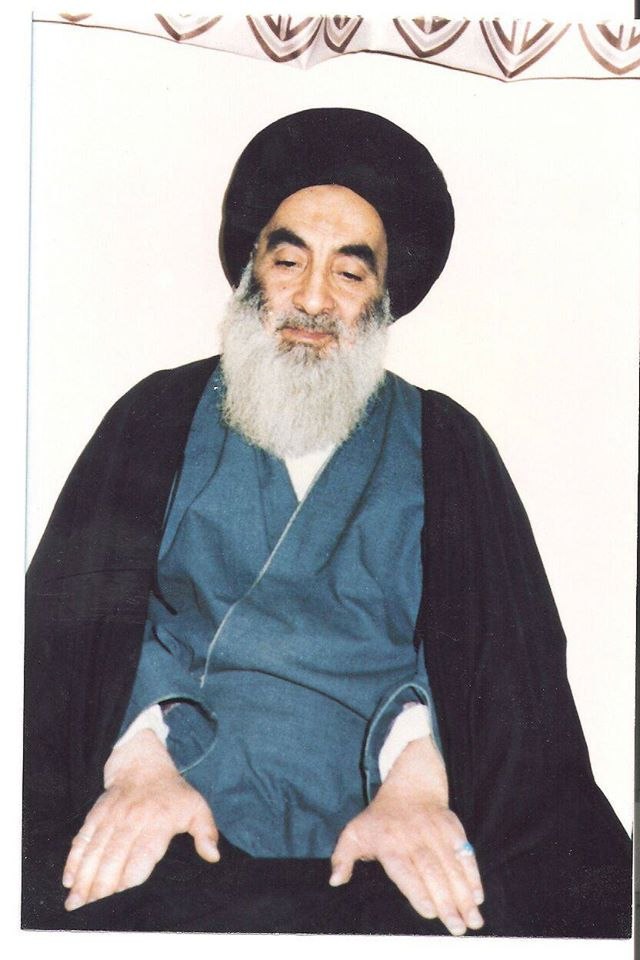
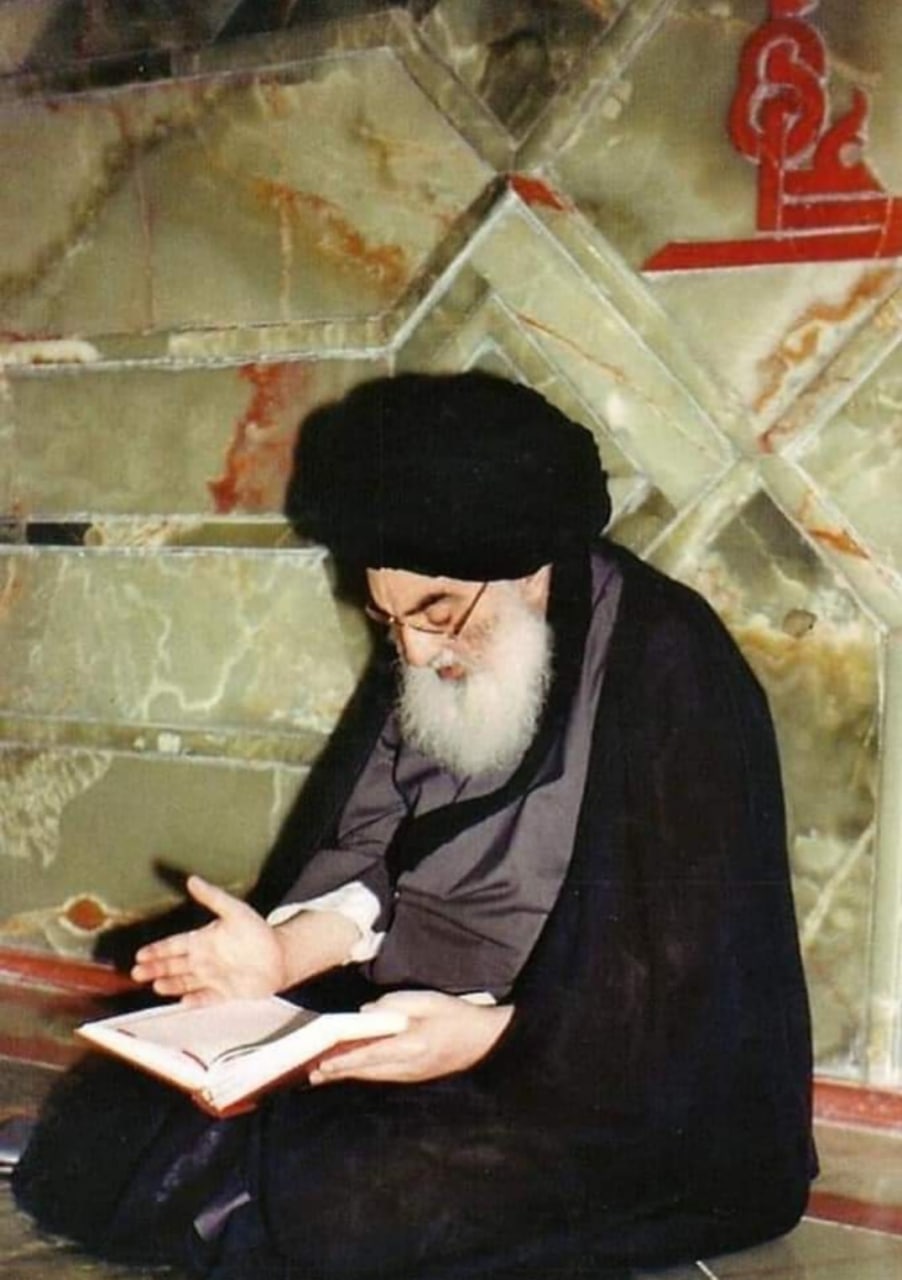
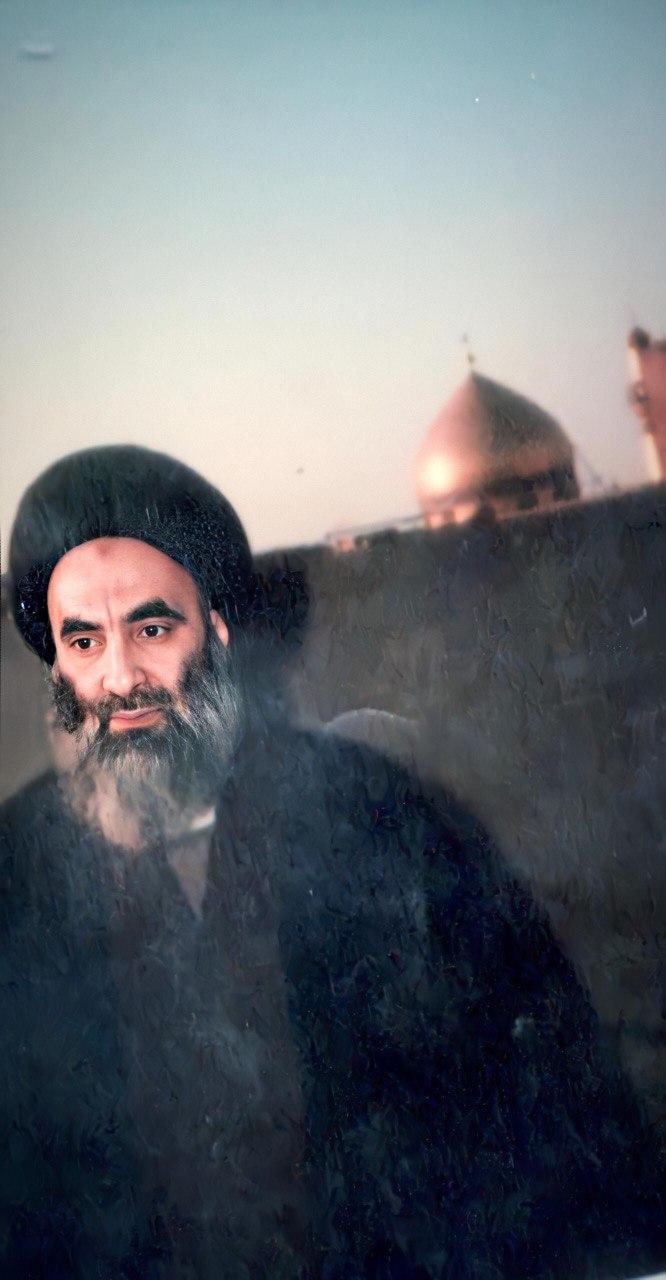
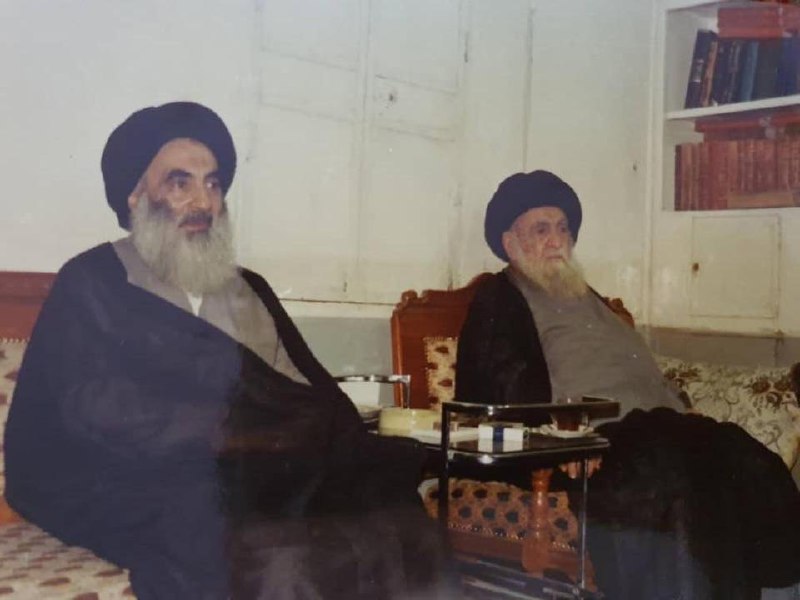
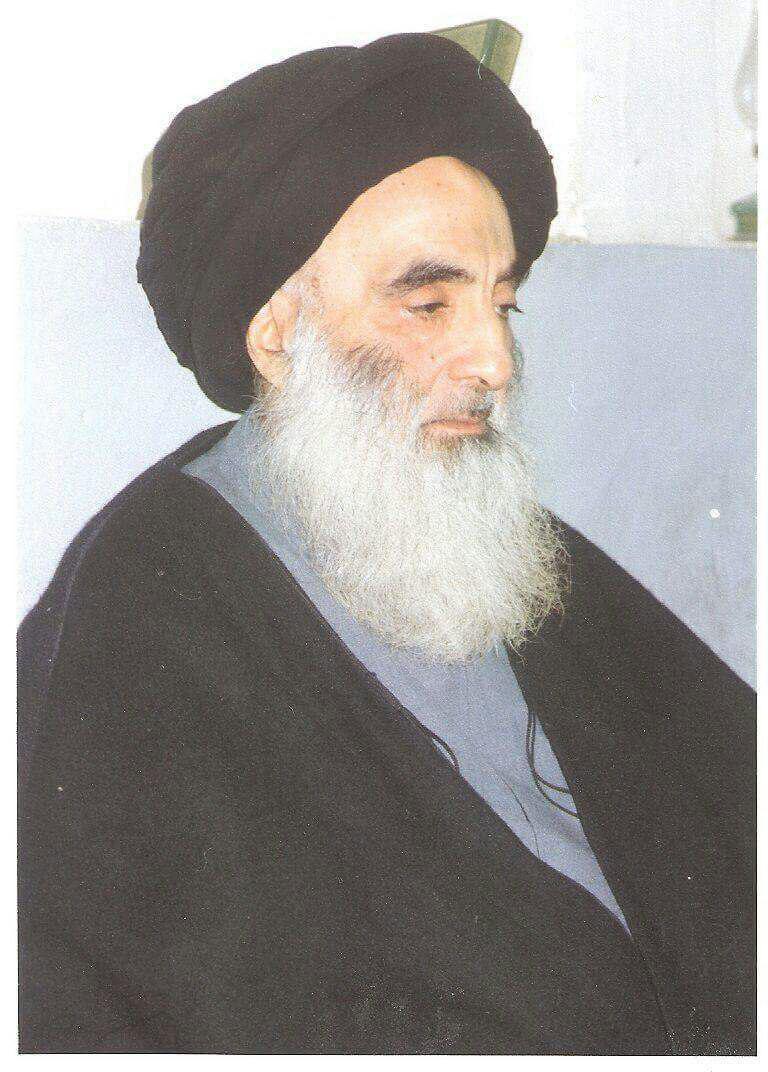
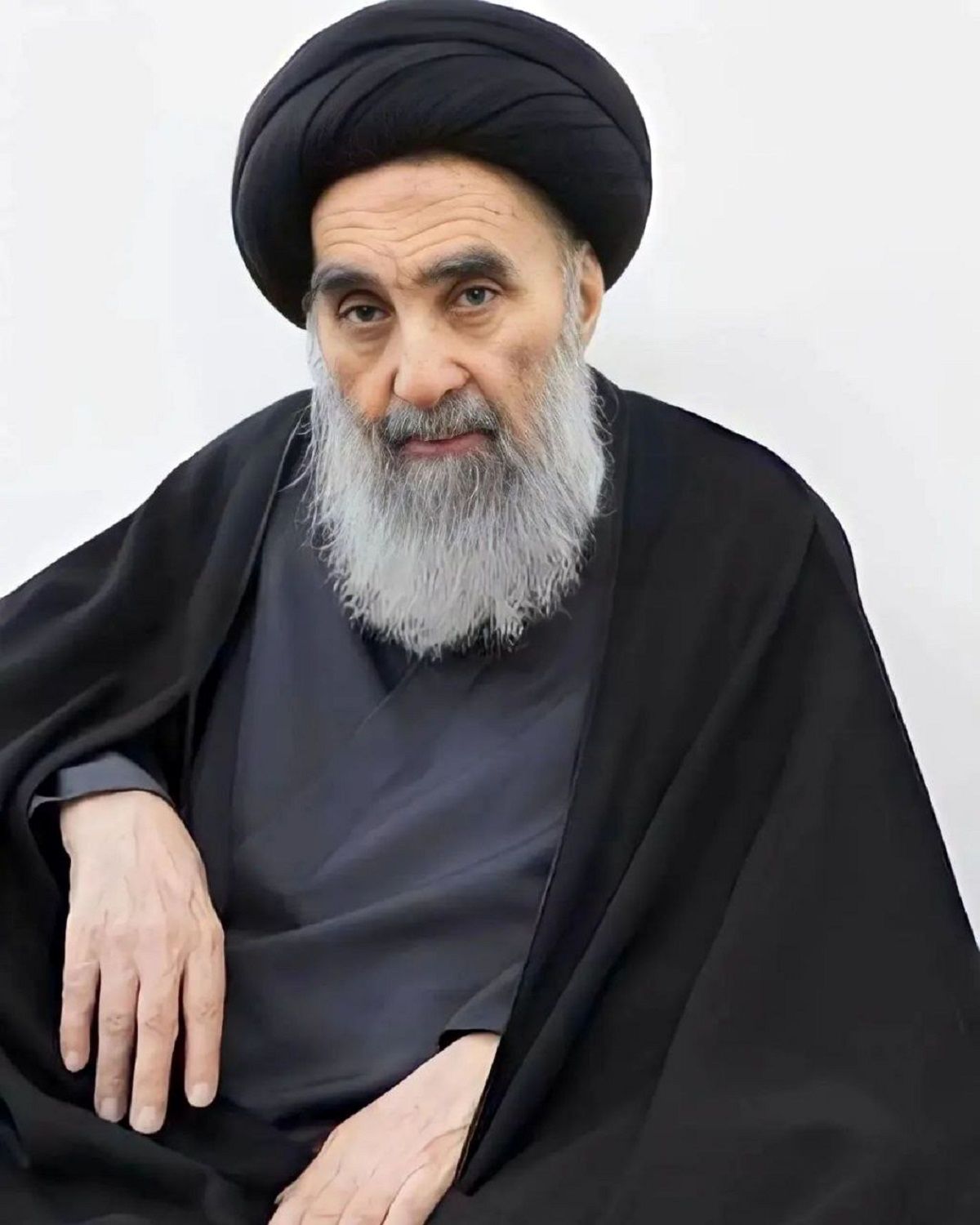
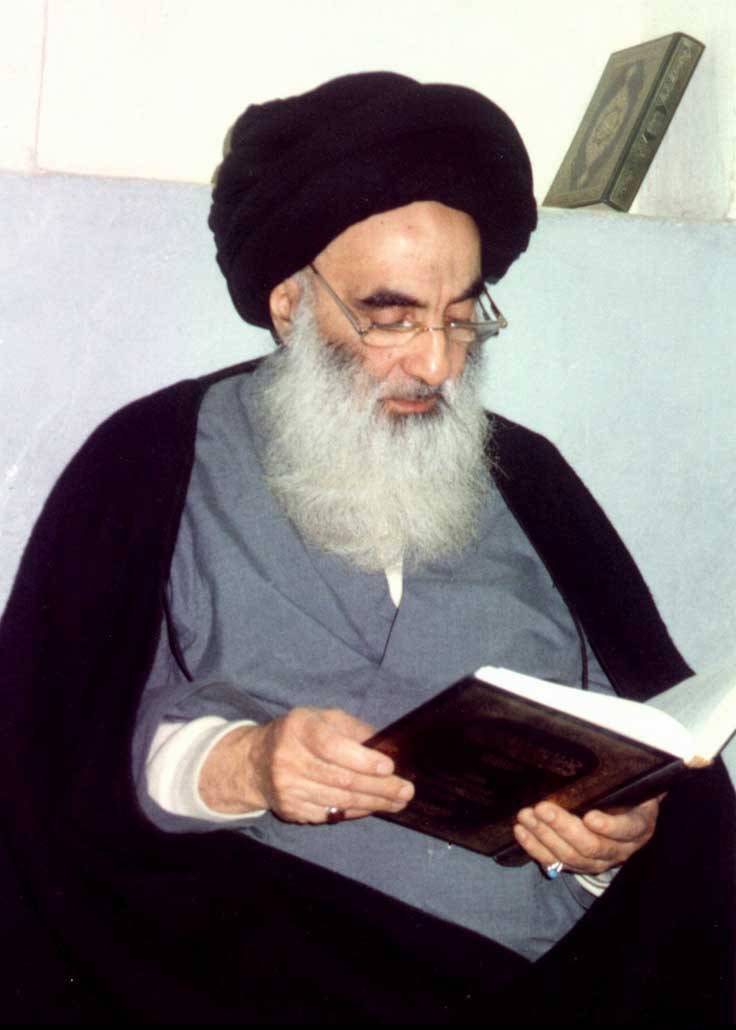
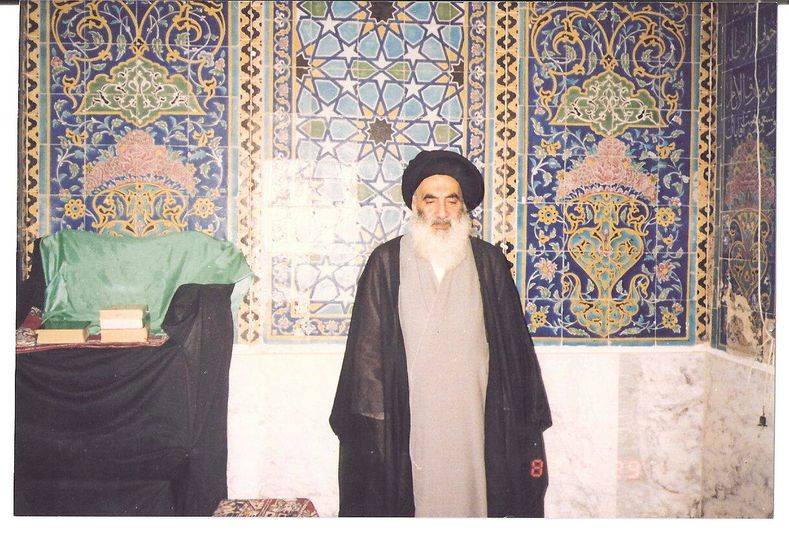
One of the most distinguished and eminent of these brilliant figures is our master, Grand Ayatollah Sayyid Ali al-Husseini al-Sistani (may his shadow be prolonged). He is among the most outstanding students of the late Imam al-Khoei (may his secret be sanctified), excelling in intelligence, knowledge, virtue, and capability. Our discussion in these lines will offer a concise overview of this great scholar’s character in several key points.
His Birth and Upbringing
His Eminence was born on the 9th of Rabi‘ al-Awwal in the year 1349 AH in the sacred city of Mashhad al-Ridawi, into a well-known scholarly family. His father was the revered scholar, Sayyid Muhammad Baqir, and his mother was the noble lady, a descendant of virtue and daughter of the late scholar Sayyid Reza al-Mohrabani al-Sarabi. His paternal grandfather was the esteemed scholar, Sayyid Ali, whom the distinguished Sheikh Agha Buzurg mentioned in Tabaqat A‘lam al-Shi‘a, saying: “He was among the students of the esteemed scholar Mulla Ali al-Nahawandi in Najaf al-Ashraf, and later studied under the renovator al-Shirazi in Samarra. Eventually, he became closely associated with the eminent Sayyid Isma‘il al-Sadr. Around the year 1318 AH, he returned to Mashhad of Imam al-Ridha (peace be upon him), where he settled and attained a prominent status, possessing great knowledge coupled with piety and virtue.” Among his notable students was the great jurist Sheikh Muhammad Rida Al-Yasin (may his secret be sanctified).
The family of our master (may his shadow endure)—a noble Husayni Alid lineage—resided in the city of Isfahan in the 11th century AH. One of its most illustrious figures at the time was the renowned philosopher Muhammad Baqir al-Damad, author of al-Qabasat. Among his descendants was the eminent scholar Sayyid Muhammad, who was appointed as Shaykh al-Islam in the region of Sistan during the reign of Sultan Husayn al-Safavi. He moved there and his descendants remained in the area. The first among them to migrate to Mashhad al-Ridha (peace be upon him) was the aforementioned Sayyid Ali. He initially stayed at the school of the late Mulla Muhammad Baqir al-Sabzawari, before traveling to Najaf al-Ashraf to continue his studies, and then on to holy Samarra for the same purpose.
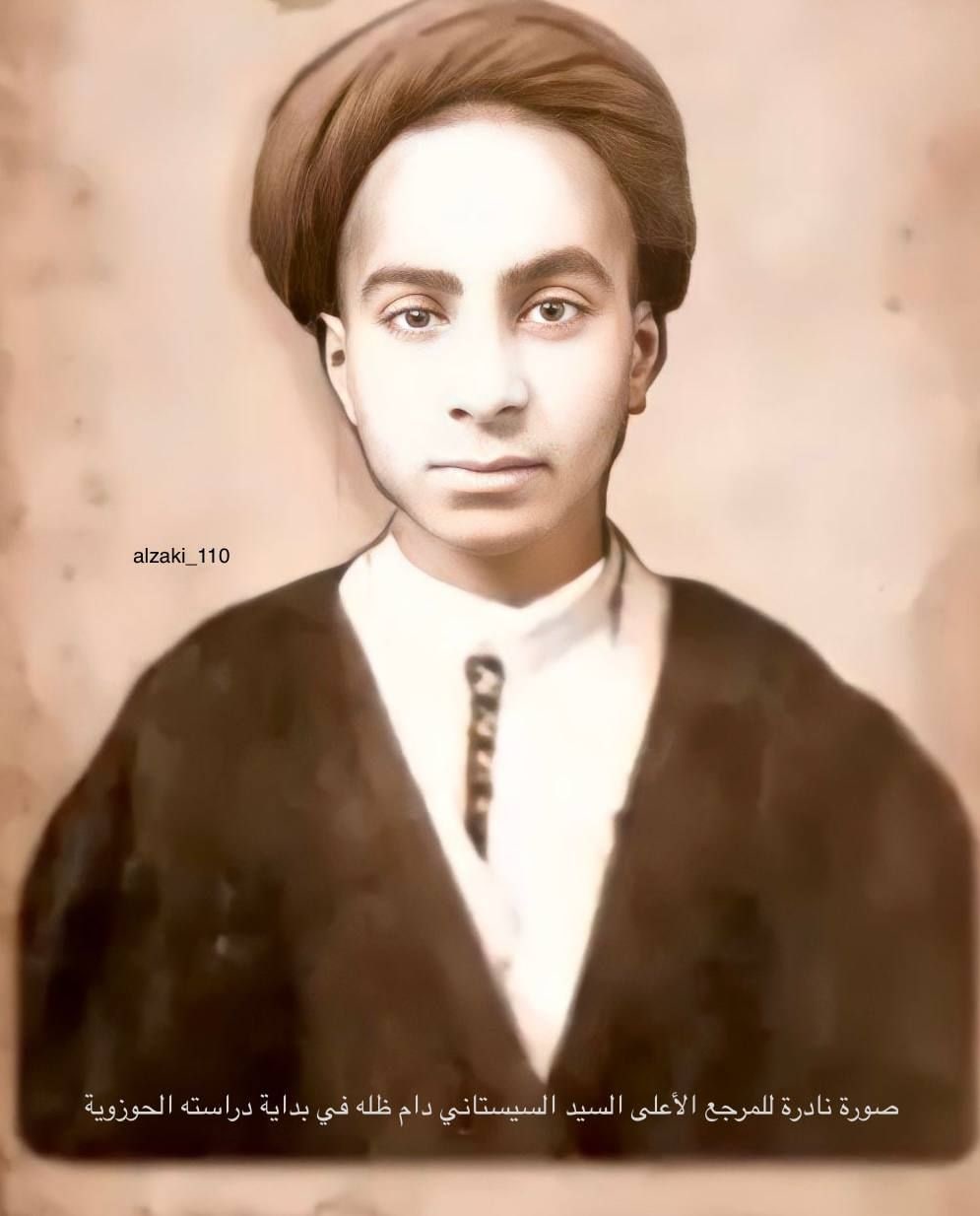
Our master (may his shadow remain) was raised in his birthplace, Mashhad al-Ridawi, with a noble upbringing. He began by learning the Holy Qur’an at the age of five, and then enrolled in Dar al-Ta‘lim al-Dini school to study reading, writing, and related subjects. He graduated from this school and during his time there also learned calligraphy under his teacher Mirza Ali Agha Zalim. In early 1360 AH, guided by his father, he began studying introductory Hawza subjects. He completed a number of important literary works, such as Sharh al-Alfiyya by al-Suyuti, al-Mughni by Ibn Hisham, al-Mutawwal by al-Taftazani, Maqamat al-Hariri, and Sharh al-Nizam with the late literary master of Nishapur and others. He studied Sharh al-Lum‘a and al-Qawanin with the late Sayyid Ahmad al-Yazdi (known as “Nahang”), and various advanced texts like al-Makasib, al-Rasa’il, and al-Kifaya with Ayatollah Mirza Hashim al-Qazwini. He also studied philosophical works such as Sharh al-Manzuma of Sabzawari, Sharh al-Ishraq, and al-Asfar under the late Aysi, as well as Shawariq al-Ilham with the late Ayatollah Sheikh Mujtaba al-Qazwini. In the field of divine metaphysics, he attended the lectures of the late Ayatollah Mirza Mahdi al-Isfahani (d. late 1365 AH), and also the advanced (bahth al-kharij) studies of Ayatollah Mirza Mahdi al-Ashtiyani—the commentator on Sharh al-Manzuma—and of Ayatollah Mirza Hashim al-Qazwini (may their souls be sanctified).
In late 1368 AH, he moved to the religious seminary in the sacred city of Qom, where he attended the lectures of the grand jurist Sayyid Husayn al-Tabataba’i al-Burujirdi in jurisprudence and principles. He benefited greatly from his expertise and gained much from his unique theories in the fields of rijal (biographical evaluation) and hadith sciences. He also attended the lessons of the great jurist Sayyid Muhammad al-Hujjat al-Kuhkamari (may his secret be sanctified).
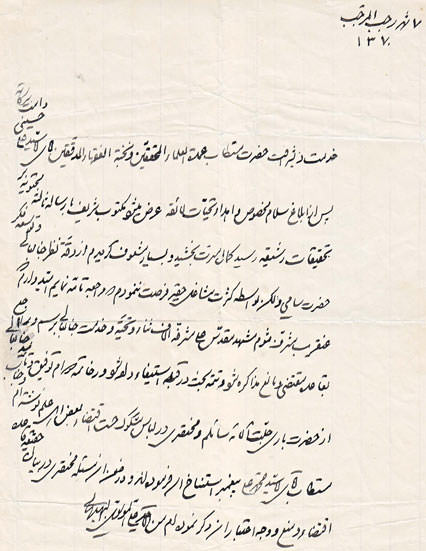
During his stay in Qom, he corresponded with the late scholar Sayyid Ali al-Behbahani—a well-known ‘alim of Ahwaz and follower of the school of al-Muhaqqiq al-Tehrani. The correspondence revolved around issues related to the qibla direction, where our master (may his shade endure) critically examined some of al-Muhaqqiq al-Tehrani’s theories. Sayyid al-Behbahani responded with a strong defense. After several letters were exchanged, the late Sayyid al-Behbahani wrote a letter dated 7th Rajab 1370 AH—at the time when our master was just 21 years old—praising his scholarly excellence and describing him as “the pillar among investigating scholars and the elite among precise jurists,” entrusting him with continuing the research until they could meet in person upon visiting Imam al-Ridha (peace be upon him).
In early 1371 AH, our esteemed master (may his shadow endure) departed the city of Qom, heading toward the cradle of knowledge and virtue—the scholarly seminary of Najaf al-Ashraf. He arrived in the holy city of Karbala on the occasion of Arba‘een, the commemoration of Imam al-Husayn (peace be upon him), and then proceeded to Najaf al-Ashraf, where he took residence at the al-Bukhara’i Seminary. There, he attended the jurisprudential and doctrinal lectures of the two great authorities, Sayyid Abu al-Qasim al-Musawi al-Khoei (may his secret be sanctified) and Sheikh Husayn al-Hilli (may his secret be sanctified), closely accompanying them for a considerable period. During that time, he also participated in the studies of other prominent scholars, including Sayyid al-Hakim and Sayyid al-Shahroudi (may their secrets be sanctified).
His Scholarly Genius
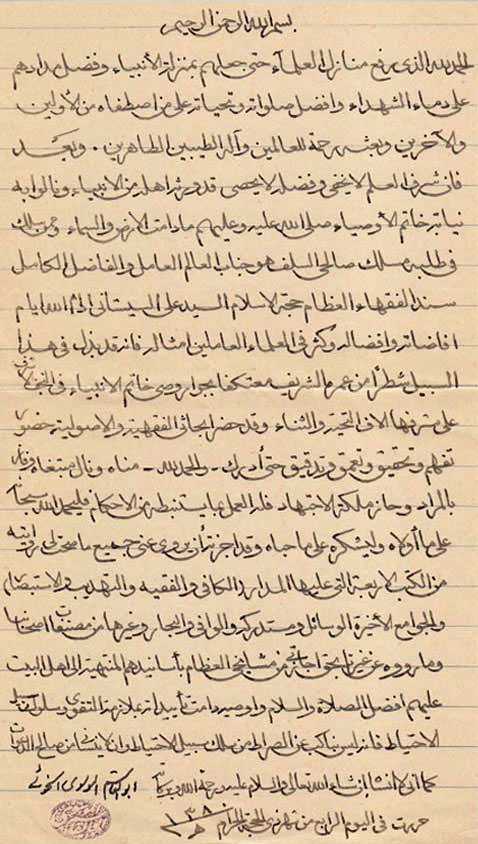
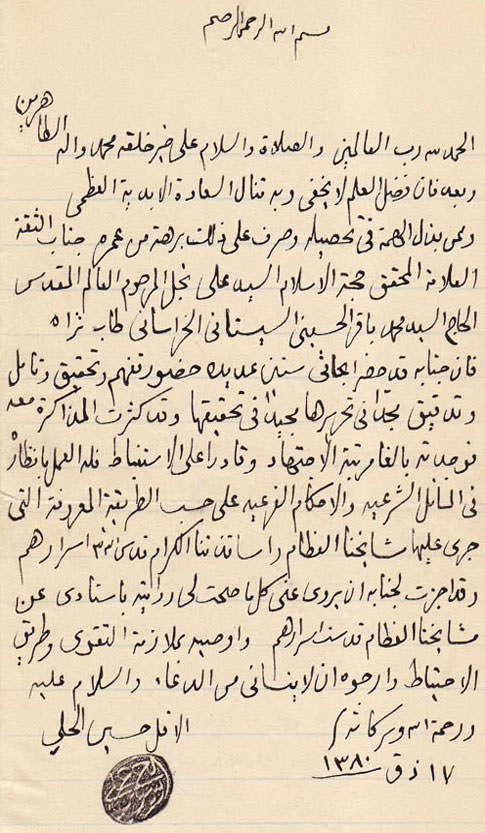
Sayyid al-Sistani (may his shadow endure) stood out remarkably among his peers in the studies of his teachers, distinguished by his powerful critical thinking, quick intellect, deep analytical research, tireless scholarly engagement, and his mastery of numerous theories across various fields of Islamic seminary sciences. A testament to this brilliance came in the year 1380 AH, when—at just thirty-one years of age—he was granted the certificate of absolute ijtihad by his two teachers, Sayyid al-Khoei and Sheikh al-Hilli (may their secrets be sanctified). Sayyid al-Khoei was known for granting such recognition only to a rare few among his students—including our master and Ayatollah Sheikh Ali al-Falsafi, a renowned scholar from holy Mashhad. Likewise, Sheikh al-Hilli did not grant a certificate of ijtihad to anyone else besides him (may his shade remain).
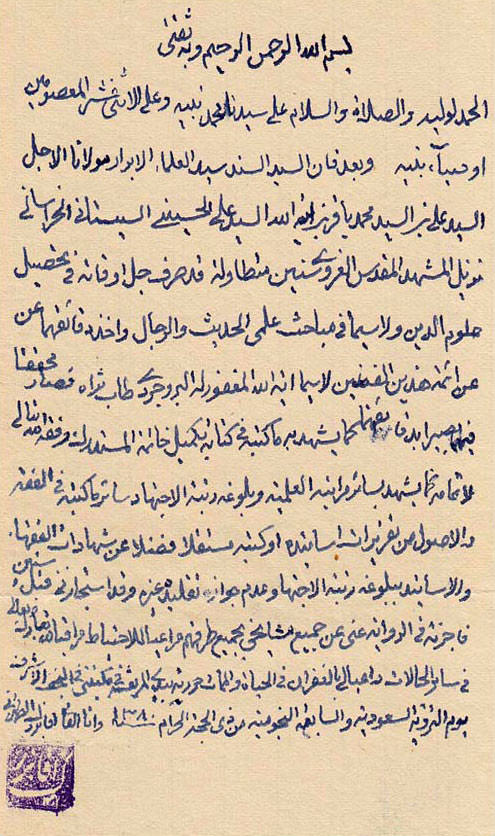
He also received a written testimonial from the foremost hadith scholar of his era, the distinguished Sheikh Agha Buzurg al-Tehrani (may his secret be sanctified), who praised his expertise in the sciences of rijāl (narrator evaluation) and hadith. That document, too, was dated in the year 1380 AH.
His Intellectual Contributions and Writings
From the beginning of the year 1381 AH, our esteemed master (may his shadow endure) began delivering his advanced jurisprudential lectures (bahth al-kharij) on fiqh, focusing on Makāsib by Shaykh al-A‘ẓam al-Ansari. He followed this with a detailed commentary on al-‘Urwa al-Wuthqā, successfully completing the sections on ritual purification, the majority of prayer, parts of khums, and the entirety of fasting and i‘tikāf. He then proceeded to begin his commentary on the section of zakāt.
Throughout these years, he also delivered jurisprudential lectures covering other areas, including judiciary matters, usury, the principle of binding (ilzām), the principle of taqiyya (dissimulation), and other legal maxims. Additionally, he held lectures in the field of ‘ilm al-rijāl (narrator criticism), covering topics such as the authenticity of Ibn Abī ʿUmayr’s mursal reports and an explanation of the Mashyakhah of the two Tahdhibs, among others.
He began his lectures in uṣūl al-fiqh in Sha‘ban of 1384 AH and completed his third full cycle in Sha‘ban of 1411 AH. Audio recordings exist for all his jurisprudential and uṣūl lectures beginning from 1397 AH up to the present.
His noble seminar has produced a number of prominent scholars, some of whom are themselves instructors of bahth al-kharij. Among them are: the distinguished Shaykh Mahdi Marwarid, Sayyid Murtadha al-Mihri, the late Sayyid Habib Husayniyān, Sayyid Ahmad al-Madadi, Shaykh Mustafa al-Harandi, Sayyid Hashim al-Hashimi, and many others among the eminent instructors of Islamic seminaries.
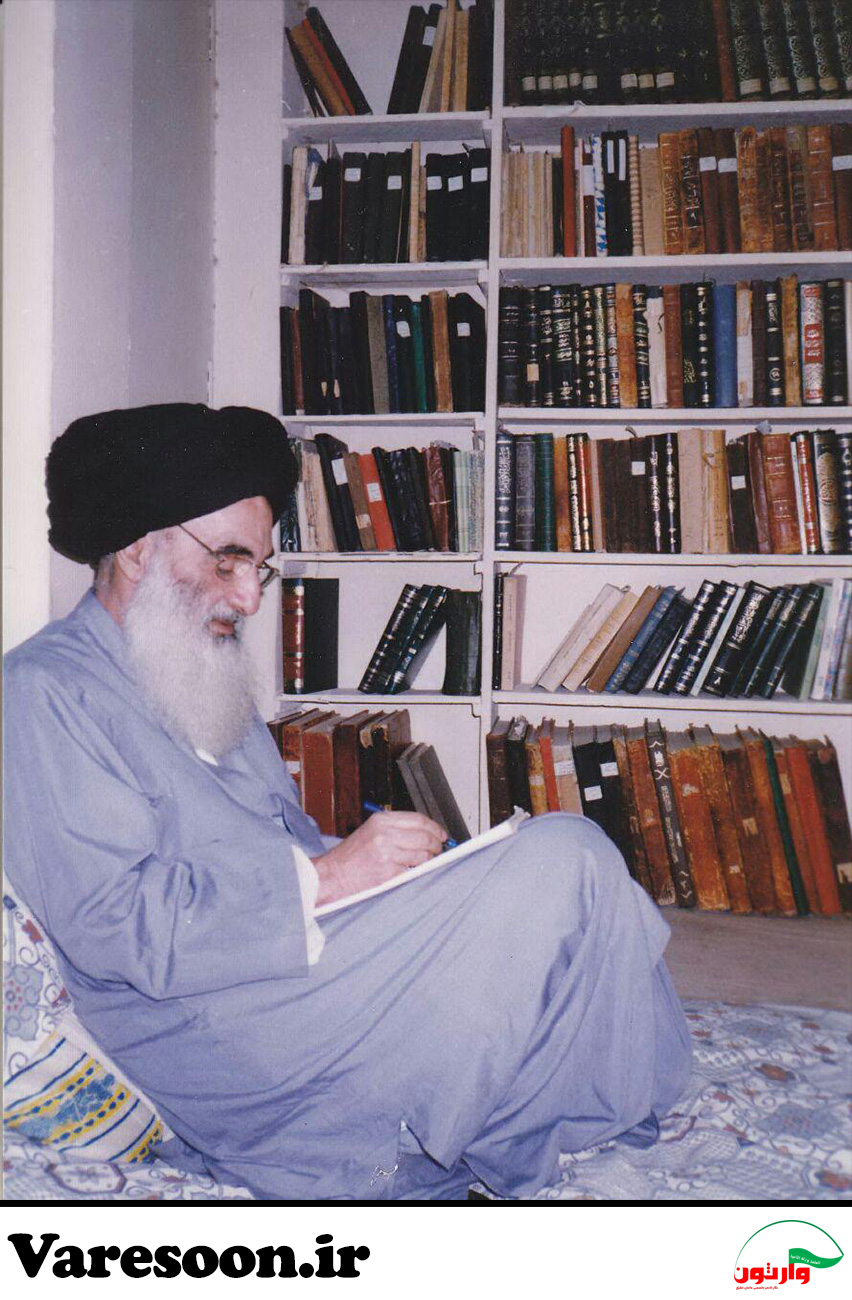
Alongside his dedication to teaching and research during this period, His Eminence (may his shadow endure) also focused on authoring important works and a series of treatises, in addition to recording and compiling the lessons and insights of his own teachers in both fiqh and uṣūl. A number of these writings will be mentioned in another section.
His Methodology in Research and Teaching
His Eminence (may his shadow endure) follows a distinct methodology—markedly different from many seminary scholars and senior instructors of bahth al-kharij. In the field of uṣūl al-fiqh (principles of jurisprudence), his method is defined by several unique features:
a. Historical Contextualization of Discussions He begins by exploring the historical roots of each topic—be they philosophical, such as the discussion on the simplicity or complexity of derived terms (mushtaq), or theological and political, like the debate on conflicting narrations (ta‘ādul wa tarājiḥ). He explains how the phenomenon of hadith discrepancies arose from ideological and doctrinal conflicts and the political circumstances that surrounded the Imams (peace be upon them). Understanding the historical backdrop of a discussion helps unveil critical dimensions and clarifies the essence of differing viewpoints.
b. Bridging Traditional Seminary Thought with Contemporary Intellectual Frameworks In his analysis of relational meanings (ma‘nā ḥarfī), he distinguishes it from substantive meanings (ma‘nā ismī) by adopting the approach of the Kifāyah author—attributing the distinction to perspective—yet grounds it in modern philosophical thought, particularly the theory of perceptual multiplicity and mental creativity. Thus, the human mind can conceive a single idea in two forms: either as independent and clear (noun) or as functional and concise (particle). In the debate on the term “time,” he introduced a philosophical notion that time is a construct derived from space—spacetime—in the context of alternating light and darkness. Elsewhere, in exploring the imperative form, its substance, and concepts like tajarrī (acting on mistaken judgment), he drew on sociological theories suggesting that requests such as commands, pleas, or suggestions reflect social hierarchy (superior, equal, inferior). He critiques classical concepts like the criteria for punishment based on the idea of rebellion or insubordination—a legacy of ancient class-based societies with concepts of masters and slaves—contrasting it with a human-centered, justice-oriented legal framework.
c. Emphasis on Fiqh-Relevant Foundational Principles While some scholars indulge in lengthy explorations of foundational topics with little jurisprudential application—like abstract debates on the nature of language or academic definitions of a science—Sayyid al-Sistani prioritizes topics essential to the jurist’s inferential process. He dedicates significant effort to topics like uṣūl ‘amaliyyah (practical principles), ta‘ādul wa tarājiḥ (weighing conflicting evidence), and general-versus-specific (‘ām wa khāṣ) discussions, while only briefly addressing other areas unless they contribute to practical outcomes in jurisprudence.
d. Innovation and Renewal Unlike some highly skilled teachers who focus on stylistic commentary or merely selecting the most convincing view among existing ones, Sayyid al-Sistani approaches each issue with a creative mindset. He may reframe a topic in light of practical relevance—such as his treatment of using one word for multiple meanings. While traditional uṣūl scholars examined it abstractly as a matter of possibility versus impossibility, he addressed it as a matter of occurrence (wuqūʿ), which in turn strengthens the argument for its possibility, and also assessed how clearly each usage could be inferred. In the discussion on conflicting narrations, he emphasized identifying the underlying causes of contradiction. By historically and contextually analyzing those causes, he proposed practical rules that resolve disputes without resorting to arbitrary preference methods like those found in Kifāyah. His approach has not only been more grounded in hadith and historical sources, but he has also applied it across his jurisprudential lessons.
e. Comparative Engagement with Multiple Scholarly Traditions Whereas many scholars tend to confine their research to the framework of a single school or intellectual lineage, Sayyid al-Sistani juxtaposes the views of the Mashhad, Qom, and Najaf seminaries. He presents ideas from Mirza Mahdi al-Isfahani (Mashhad), Sayyid al-Burujirdi (Qom), and the prominent jurists of Najaf such as Shaykh al-Nā’īnī, Shaykh al-‘Irāqī, Shaykh al-Isfahānī, Sayyid al-Khoei, and Shaykh Husayn al-Hilli (may their secrets be sanctified). This comparative method enriches the intellectual horizon and gives clearer insight into the depth and angles of each scholarly discourse.
His Jurisprudential Methodology
Sayyid al-Sistani (may his shadow endure) adopts a unique and distinguished approach in his teaching and presentation of fiqh (Islamic jurisprudence). This methodology is characterized by several key features:
-
Comparative Jurisprudence He frequently compares Shi’a fiqh with that of other Islamic schools. Understanding Sunni jurisprudence contemporary to the time of the Imams—such as studying al-Muwaṭṭaʾ of Malik, the jurisprudential opinions of Abu Yusuf, and other classical jurists—sheds light on the aims and perspectives of the Imams (peace be upon them) when they presented their narrations.
-
Integration of Modern Legal Theory He incorporates insights from modern legal systems in his jurisprudential analysis. For example, while teaching Kitāb al-Bayʿ (Book of Sale) and the chapter on options (khiārāt), he refers to Iraqi, Egyptian, and French civil codes. This engagement equips the jurist with a broader legal literacy, enhancing their ability to critically assess and expand the scope and application of fiqh principles.
-
Innovative Framing of Legal Maxims Unlike many scholars who inherit and reuse classical formulations of legal rules, Sayyid al-Sistani reexamines and sometimes redefines them. Take the principle of ilzām (binding), which some view from a utilitarian angle—allowing a believer to benefit from another school's ruling even if his own school doesn’t recognize it. Sayyid al-Sistani reframes this as the principle of respect—respecting the views and laws of others, grounded in the concept of freedom of belief and examples such as: “Each people has their own form of marriage” or “The marriage of polytheists is valid.” Similarly, while traditional scholars view tazāḥum (conflict of duties) as a purely rational principle, Sayyid al-Sistani ties it to the principle of necessity, a sharʿī principle grounded in narrations like: “There is nothing God has forbidden except that He has permitted it in cases of necessity.” This reinterpretation aligns the outcomes of tazāḥum with a legally substantiated framework. He also broadens certain rules, such as lā tuʿād (“the prayer is not to be repeated [except for five things]”), which classical jurists confined to ritual prayer. He interprets it as part of a greater legal maxim that prioritizes obligations over recommended acts—not only in prayer but across other religious duties—based on the concluding statement of the narration: “A recommended act does not override an obligation.”
-
Social Contextualization of Texts Rather than relying solely on the literal meaning of a narration, he considers its social and historical context. For example, regarding the Prophet’s prohibition of eating domesticated donkey meat during the Battle of Khaybar: the literal view might suggest prohibition or undesirability. But a contextual reading reveals this was a wartime directive, aimed at preserving essential transport animals, not a blanket legal ruling. Sayyid al-Sistani is a strong advocate of this contextual reading in his jurisprudence.
-
Mastery of Source Disciplines for Legal Derivation He emphasizes that a true jurist must be deeply versed in classical Arabic—its poetry, oration, metaphors—and in the full range of linguistic and literary sources. This mastery enables an objective, rather than subjective, understanding of legal texts. Moreover, profound familiarity with hadith literature and the science of narrator evaluation (ʿilm al-rijāl) is essential. Sayyid al-Sistani departs from widely held views by defending the validity of Ibn al-Ghaḍāʾirī’s critical evaluations, arguing for the authenticity of his book and asserting his assessments are more reliable than those of other notable scholars like al-Najjāshī or Shaykh al-Ṭūsī. He also supports the layered generation method (manhaj al-ṭabaqāt) for verifying transmitters and identifying whether a narration is reliably transmitted or disconnected, following the view of Sayyid al-Burūjirdī.
He also emphasizes the importance of comparing hadith manuscript variants, understanding authors’ levels of precision, and their editorial methods. Contrary to the common claim that al-Ṣadūq was more precise than Shaykh al-Ṭūsī, Sayyid al-Sistani holds that Shaykh al-Ṭūsī was a trustworthy transmitter, faithfully recording what was in the manuscripts available to him, supported by contextual indicators.
Aspects of His Character
Those who have closely accompanied and interacted with Sayyid al-Sistani (may his shadow endure) recognize in him a unique personality that embodies the spiritual and moral qualities encouraged by the Ahl al-Bayt (peace be upon them). He—and scholars like him—are true reflections of the term "divinely guided scholar", as described in the hadith: “The reins of affairs are in the hands of the scholars—they are God’s trustees over what is permissible and forbidden.” To shed light on specific virtues I personally witnessed through both lessons and interactions, here are several notable traits:
a. Fairness and Respect for Opinions Sayyid al-Sistani, driven by a love for knowledge, a genuine pursuit of truth, and a deep respect for intellectual freedom and constructive dialogue, is remarkably well-read. He carefully explores books and scholarly views—even those of lesser-known scholars or those outside his immediate scholarly lineage. In some discussions, he has cited refined perspectives from scholars such as Shaykh Muhammad Rida al-Mudhaffar in his Usul al-Fiqh, despite not being one of his direct teachers. Presenting and engaging with such views reflects his spirit of fairness and appreciation for diverse opinions.
b. Courtesy in Dialogue Seminary discussions in Najaf are known for their intensity, sometimes veering into heated debate. While this can sharpen a student's intellect, it can also become counterproductive, veering into egotistical arguments that waste time and compromise the spiritual atmosphere of scholarly discourse. In contrast, Sayyid al-Sistani's discussions remain far from argumentative styles or dismissive tones. When responding to opposing views—even weak or impulsive ones—he employs respectful, measured language that honors the stature of scholars. He answers student questions with openness and guidance, and even when a student derails a thoughtful inquiry into circular argument, Sayyid al-Sistani responds with patience, repeating his answer in a scholarly manner. If the debate persists unfruitfully, he prefers silent forbearance over confrontation.
c. Educator’s Ethos Teaching is not a formal or transactional task for him—it is not about compensation, but cultivation. True educators, in his view, carry a moral duty to elevate the student in both knowledge and character. Beyond delivering lessons, teaching is a sacred mission that demands compassion, mentorship, and care. Just as Sayyid al-Hakim (may his soul be sanctified) and Sayyid al-Khoei (may his soul be sanctified) were known for their genuine concern for students, Sayyid al-Sistani embodies this same spirit. After class, he encourages students to ask questions—“Even if it's just the page number or name of a book,” he’d say—to foster academic dialogue. He prompts comparison with other printed studies, guides attention to strengths and weaknesses, insists on scholarly respect in critiques, and speaks of his own teachers with humility and reverence—traits that exemplify his noble conduct.
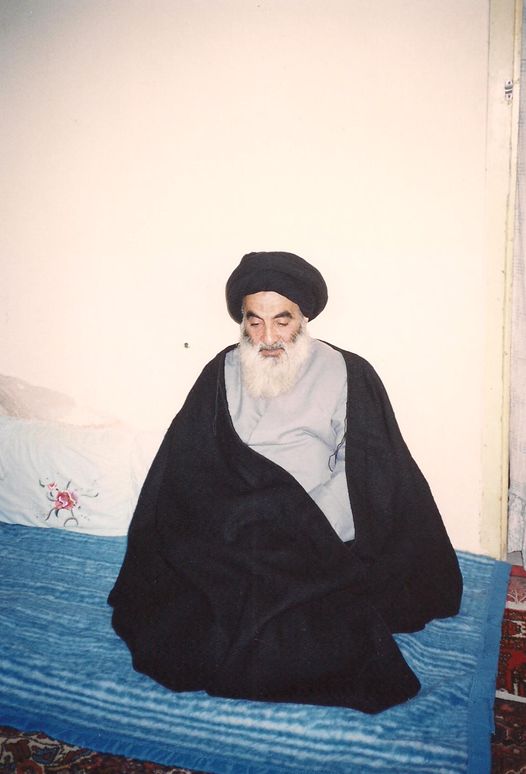
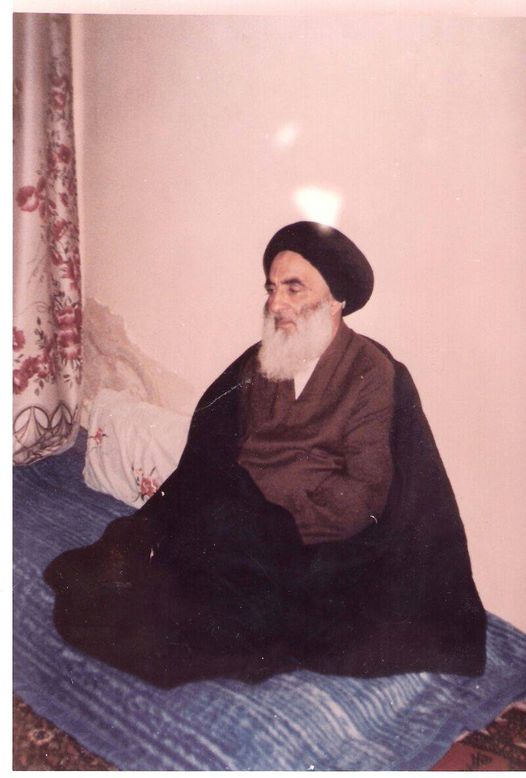
d. Piety and Dignified Distance A hallmark of many prominent scholars is their tendency to distance themselves from turmoil and controversy. While some may see this as avoidance, it is, in many cases, a principled stance born of wisdom and concern for the greater good. When the Islamic community or the seminary environment faces confusion or challenges that risk distorting foundational principles, the scholar must rise to clarify and correct. Yet, in times of personal feuds, factional biases, or heated propaganda battles, scholars like Sayyid al-Sistani choose dignified silence, steering clear of sensationalism. This posture of restraint and serenity, especially amid modern-day disputes over titles and influence, reflects not only his discipline but also his ascetic lifestyle—evident in his humble attire, modest lodging, and simple furnishings.
e. Intellectual Breadth Sayyid al-Sistani is not merely a jurist—he is an intellectual deeply informed about contemporary cultures and civilizations. He is open to modern thought and developments, possessing insight into global political and economic trends. His administrative sense and sociological awareness reflect a clear understanding of the evolving human condition. In his view, the role of a fatwa is not merely to preserve the letter of the law but to act as a thoughtful and effective tool for promoting goodness in the life of the Muslim community.
His Leadership in Prayer
On the 29th of Rabi‘ al-Thani 1409 AH, Sayyid al-Sistani (may his shadow endure) visited his mentor, the late Imam al-Khoei (may his soul be sanctified), who was unwell. During the visit, the Imam requested him to lead congregational prayers in his place at al-Khadhrāʾ Mosque. Sayyid al-Sistani initially declined, but Imam al-Khoei insisted, saying, “If I had authority like the late Hajj Agha Husayn al-Qummi, I would have made it obligatory upon you to accept.” After seeking a few days to consider, he accepted the request and began leading prayers on Friday, the 5th of Jumada al-Awwal, 1409 AH, continuing until the last Friday of Dhu al-Hijjah 1414 AH, when the mosque was shut down by the authorities, as will be detailed later.
His Struggle and Resistance
From its early days in power, the Baathist regime made persistent efforts to undermine and dismantle the religious seminary in Najaf al-Ashraf. It orchestrated mass deportations of scholars and students, particularly non-Iraqis. Sayyid al-Sistani (may his shadow endure) faced repeated threats of deportation, and many of his students and those attending his lessons were expelled during successive waves. Despite the hardships, especially during the Iran–Iraq War, he remained steadfast in Najaf, continuing to teach and defend the independence of the Hawza from political influence—a commitment he considered vital for preserving its integrity.
In 1411 AH, following the brutal suppression of the 1991 popular uprising in Iraq (al-Intifāḍa al-Shaʿbāniyya), Sayyid al-Sistani and a group of scholars—including the martyred Shaykh Murtadha al-Burujirdi and the martyred Mirza Ali al-Gharawi—were arrested and subjected to harsh interrogations and abuse at various locations including the al-Salām Hotel, the Razzaqah camp, and the Ridwaniyya prison. Their release came by the grace of God and the blessings of the Ahl al-Bayt (peace be upon them).
Following the death of Imam al-Khoei in 1413 AH, and Sayyid al-Sistani’s assumption of religious authority, the regime intensified its attempts to manipulate the leadership of the Hawza. They launched a campaign to diminish his standing, employed various tactics to distance believers from him, and eventually sealed al-Khadhrāʾ Mosque in late Dhu al-Hijjah 1414 AH.
When all attempts failed, documents from the Iraqi intelligence apparatus later revealed plots to assassinate him. But, as the Qur'an says: “They plotted, and God plotted—and God is the best of planners.”
From late 1418 AH onward, Sayyid al-Sistani remained confined to his home, even refraining from visiting the shrine of his grandfather, Imam Ali (peace be upon him), during this period. Despite continued pressure from the regime, he resisted all coercion until, by God's grace, the regime collapsed. We pray that God will also bless the Iraqi people with true liberation from all forms of occupation.
In the final years of Imam al-Khoei’s life, many scholars in Najaf and beyond were preoccupied with identifying a suitable successor to uphold the leadership of the Shia community. This figure needed not only scholarly credentials, piety, and prudence, but also the vision to preserve the independence of the Hawza and guide the faithful wisely.
The attention of many scholars turned toward Sayyid al-Sistani. Imam al-Khoei had previously chosen him to lead prayers in al-Khadhrāʾ Mosque—a gesture of deep trust. Although previously known primarily within scholarly circles for his decades of teaching advanced jurisprudence, his reputation gradually spread to the wider public.
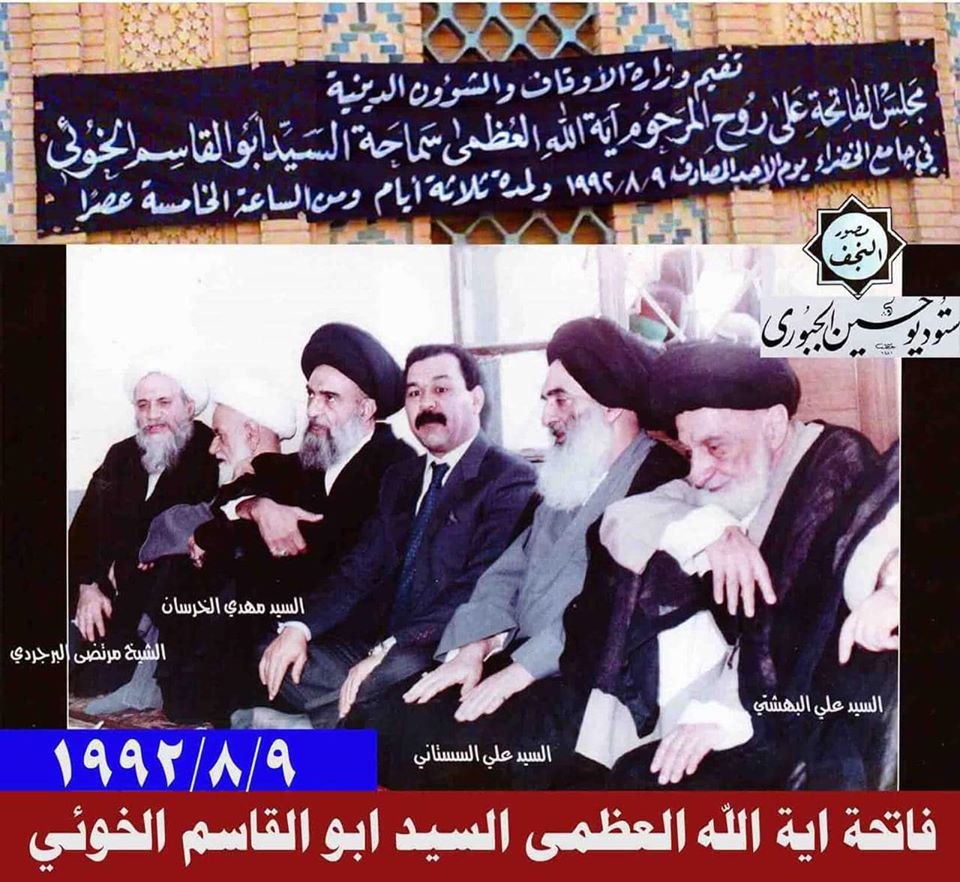
Upon Imam al-Khoei’s passing on 8th of Ṣafar 1413 AH, a number of senior scholars referred believers to follow Sayyid al-Sistani in matters of emulation (taqlīd), including Ayatollah Sayyid Ali al-Bahishti and Ayatollah Shaykh Murtadha al-Burujirdi (may their souls be sanctified). As a result, many believers in Iraq, Iran, the Gulf, Pakistan, and India began following him.
Following the death of Ayatollah al-Sabzawari on 27th of Ṣafar 1414 AH, most of his followers in Iraq, and many abroad, turned to Sayyid al-Sistani. The passing of Ayatollah al-Kalbasi on 24th of Jumada al-Thani 1414 AH led to a widespread increase in emulation across Islamic countries, including Iraq, al-Aḥsāʾ, al-Qaṭīf, Iran, Lebanon, the Gulf, Pakistan, India, and diaspora communities in Europe, the Americas, and Australia. This growth continued after the deaths of Grand Ayatollahs Shaykh Muhammad Ali al-Araki and Sayyid Muhammad al-Ruhani.
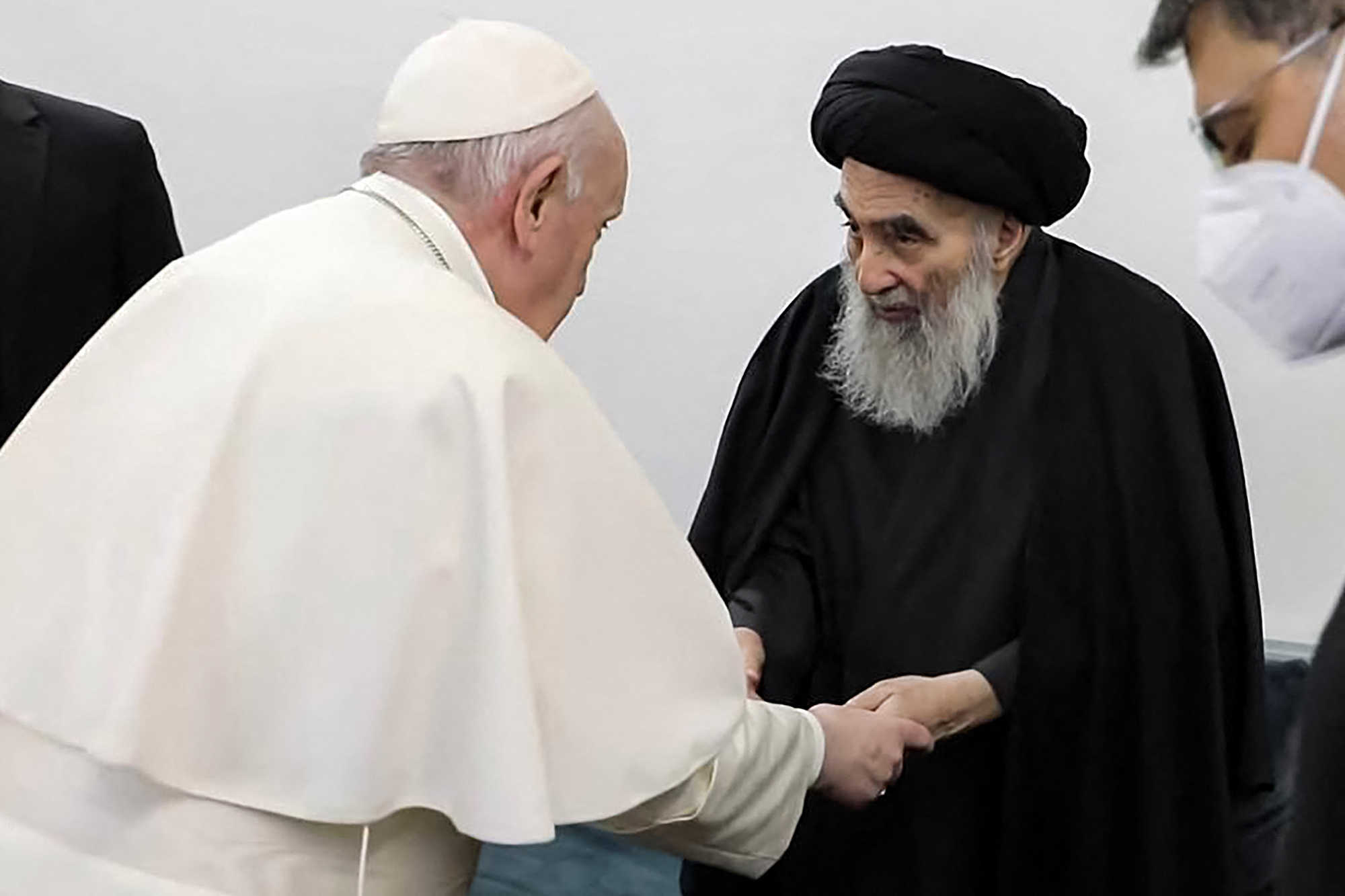
Today, Sayyid al-Sistani (may his noble shadow endure) is recognized as the highest religious authority (Marjaʿ al-Aʿlā) for the Twelver Shia world—may God preserve his noble presence and bless Islam and the Muslims through him.